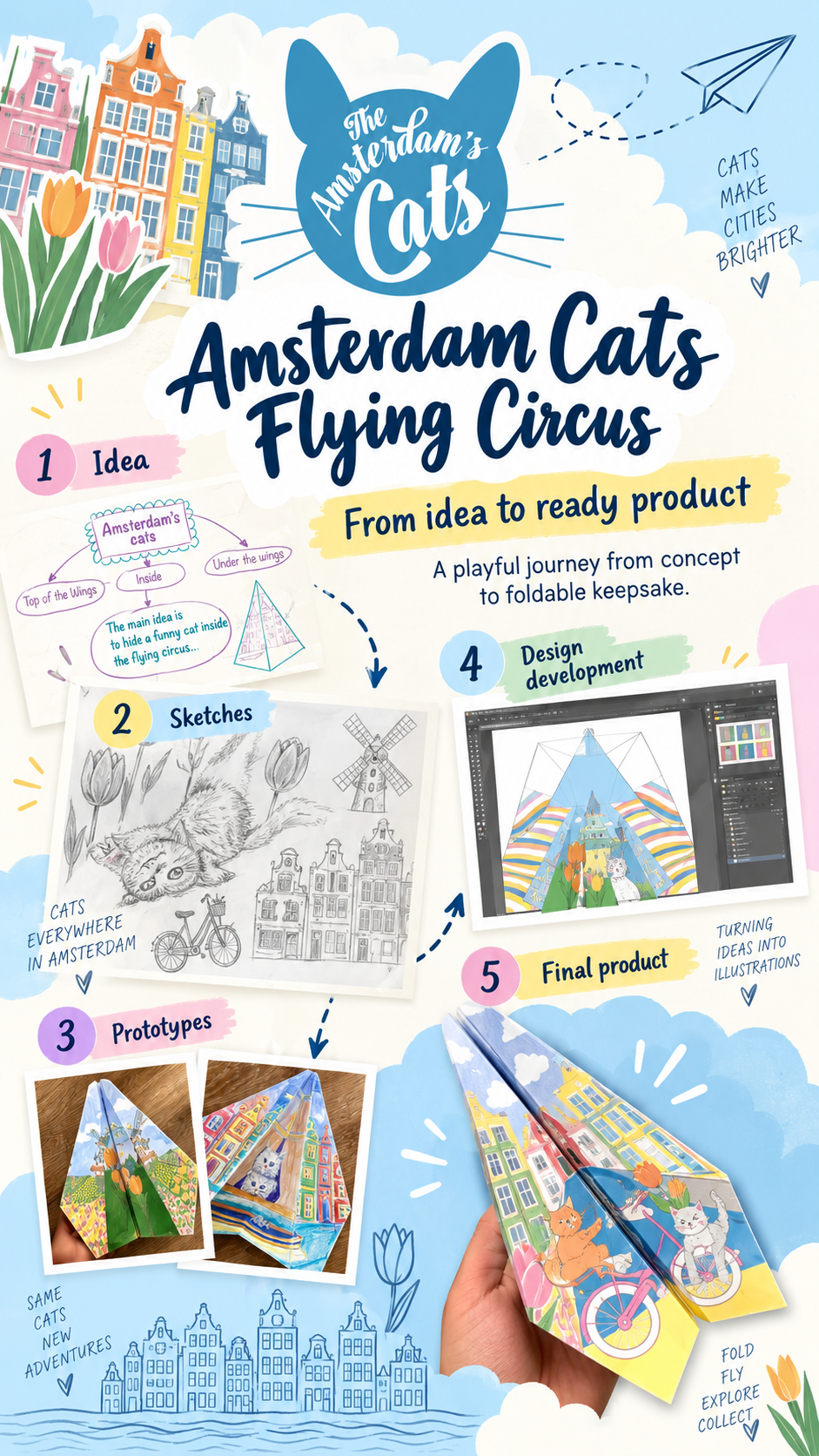
From sketchto flight.
The creative process behind Amsterdam Cats Flying Circus — from a first idea to playful, foldable keepsakes.
A small object.
A whole world inside.
At Cat & Bird Studio, a finished illustration is only one part of the story. There is also the idea behind it, the drawing that gives it character and the testing that makes it work in its final form.
Amsterdam Cats Flying Circus brings those stages together in a collection of foldable paper keepsakes. Canal houses, tulips, bicycles and curious cats become colourful scenes that reveal themselves as the paper opens.
The challenge was not simply to decorate a paper plane. It was to make the illustration and the fold work together, so the outside invites a closer look and the inside rewards it with a small surprise. Here is how we moved from an initial concept to three finished designs.
An illustration to look at.
A story to unfold.
 View full size
Finding the story in the city.
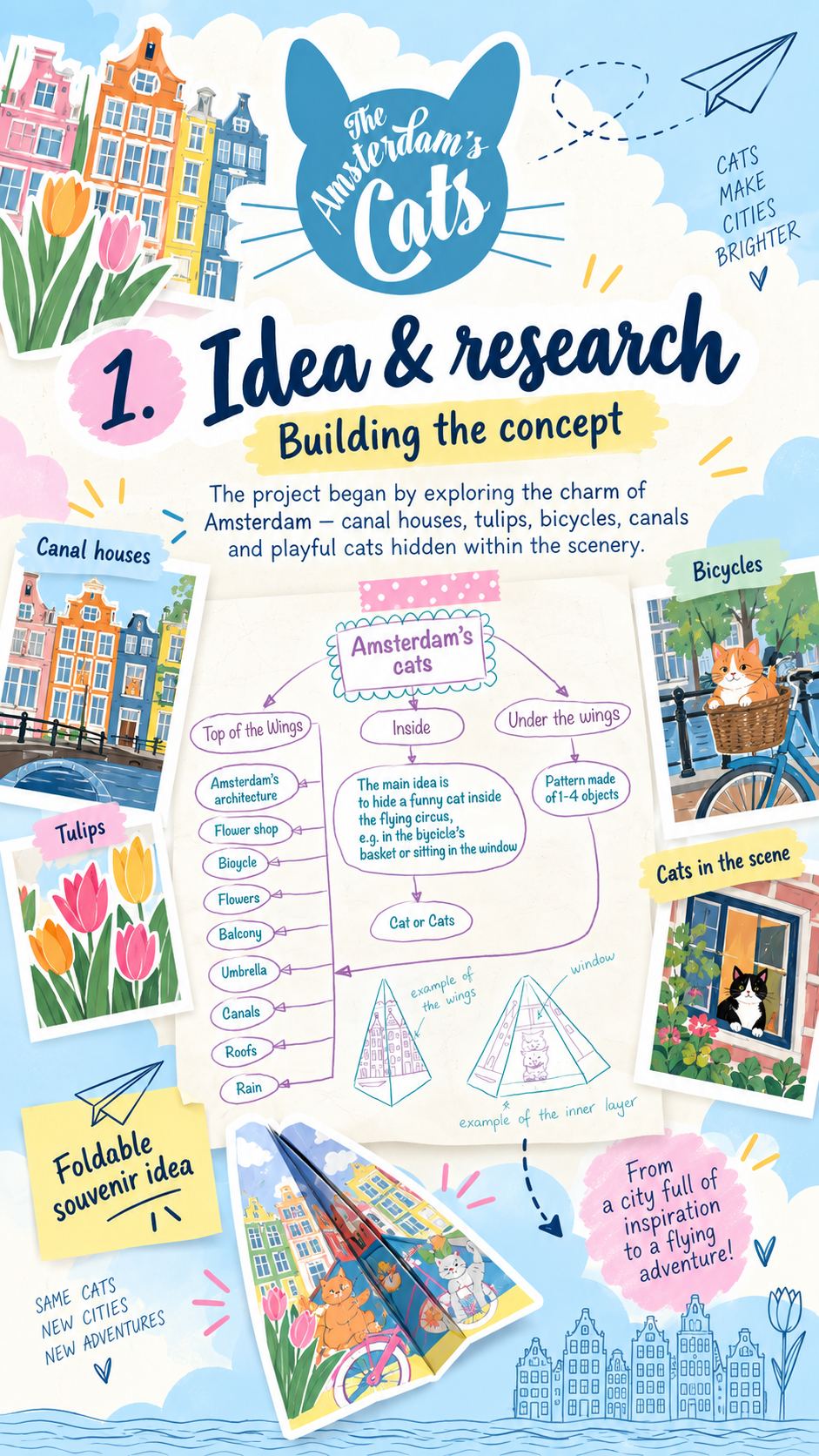
We began by exploring the Amsterdam details that could give the collection its own personality: narrow canal houses, flower-filled windows, tulips, bicycles, waterways and rooftops. Cats became the thread connecting those scenes.
The idea board divided the design into three areas: the top of the wings, the inside and underneath. That helped us think about what someone would see before opening the piece, what could be hidden inside and where a repeated pattern might work best.
A cat in a bicycle basket, a face at a window or a character tucked among flowers could turn a familiar city detail into a discovery. The central idea was simple: the fold should reveal part of the story, not just change the shape of the paper.
 View full size
Turning references into characters.
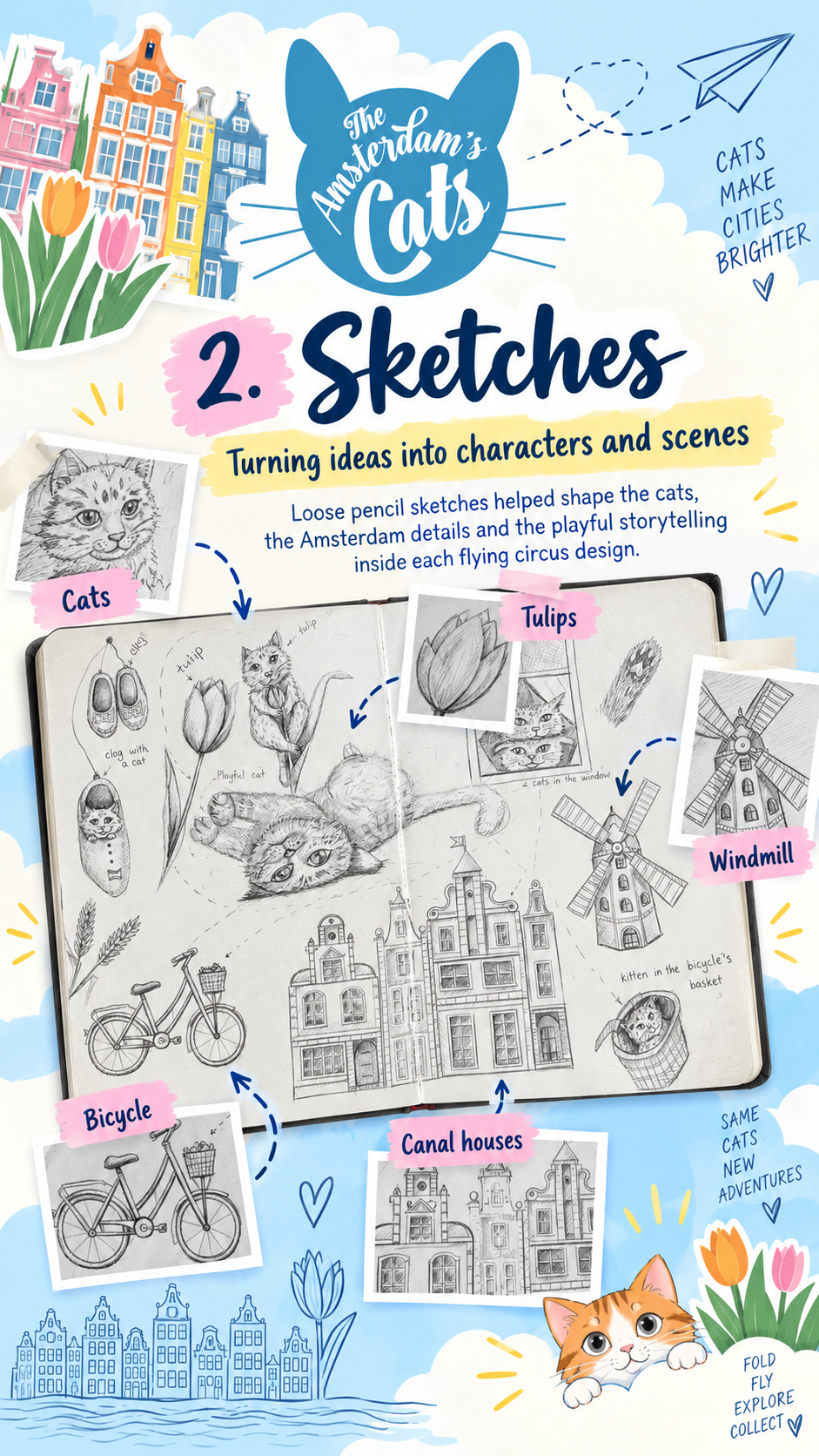
Next came loose pencil sketches. We explored cats with different expressions and poses alongside tulips, canal-house façades, a windmill and bicycles. Drawing them together helped establish the relationship between the characters and their surroundings.
The sketchbook allowed us to test small ideas without committing to finished artwork. A cat could stretch across the page, peek through a window or sit inside a basket. Architectural details and flowers gave each scene a sense of place while leaving room for the cats to be playful.
These drawings became the starting point for the digital illustrations. Keeping the early work in pencil made it easier to explore variations and decide which shapes, details and expressions were worth carrying forward.
 View full size
Testing the fold, not just the picture.
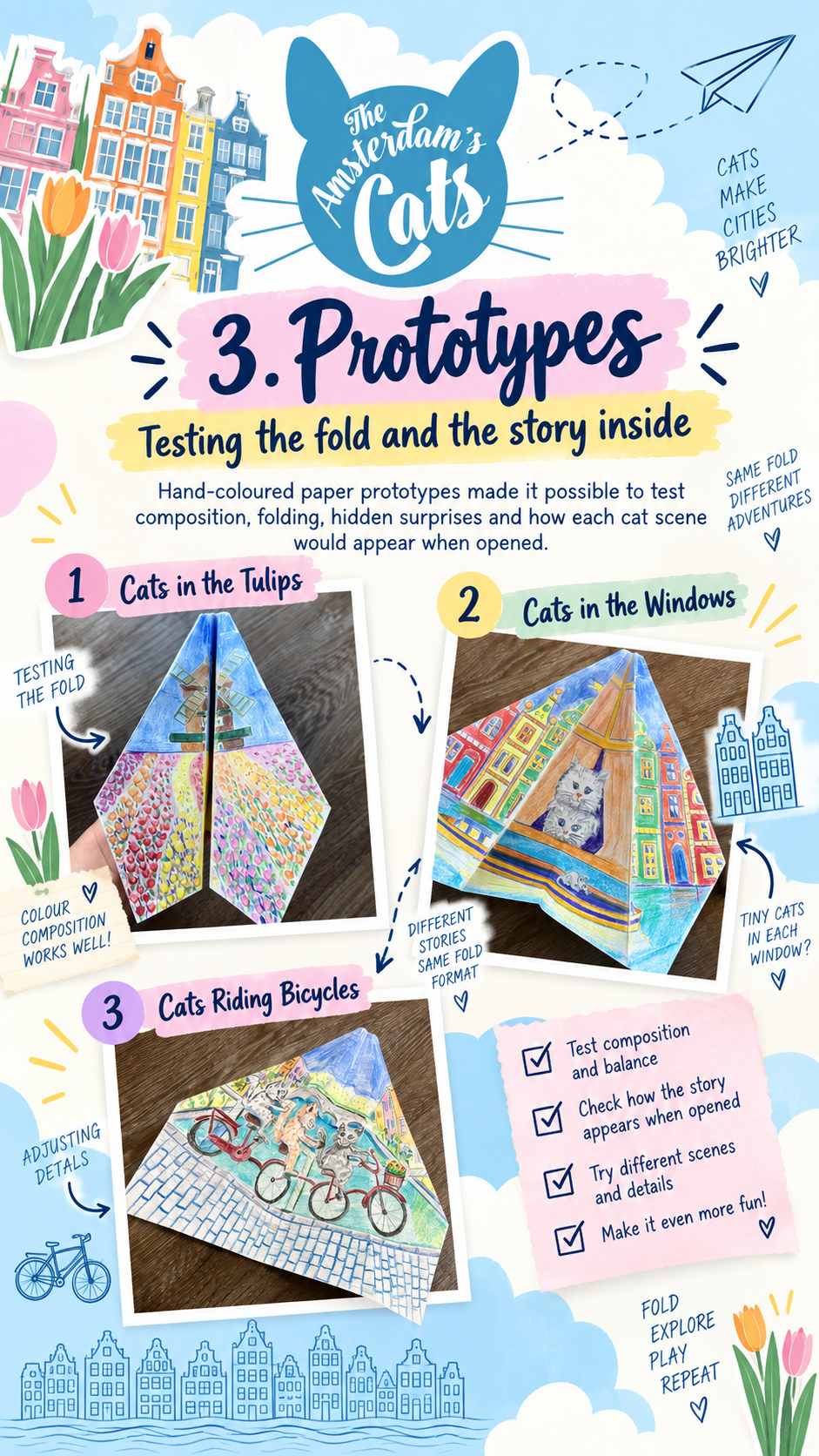
Before refining the artwork digitally, we made hand-coloured paper prototypes. This moved the project off the flat page and into the form it would eventually take: something to hold, fold and open.
Three directions emerged: Cats in the Tulips, Cats in the Windows and Cats Riding Bicycles. The same folding format could carry different scenes, each with its own colour balance and hidden details.
The prototypes helped us check composition, the position of the fold and how much of each cat would be visible when the piece was closed or opened. A scene that works on a flat sheet can read differently once folded. Testing with paper gave us a way to adjust the details before polishing the final artwork.
 View full size
From pencil lines to finished artwork.
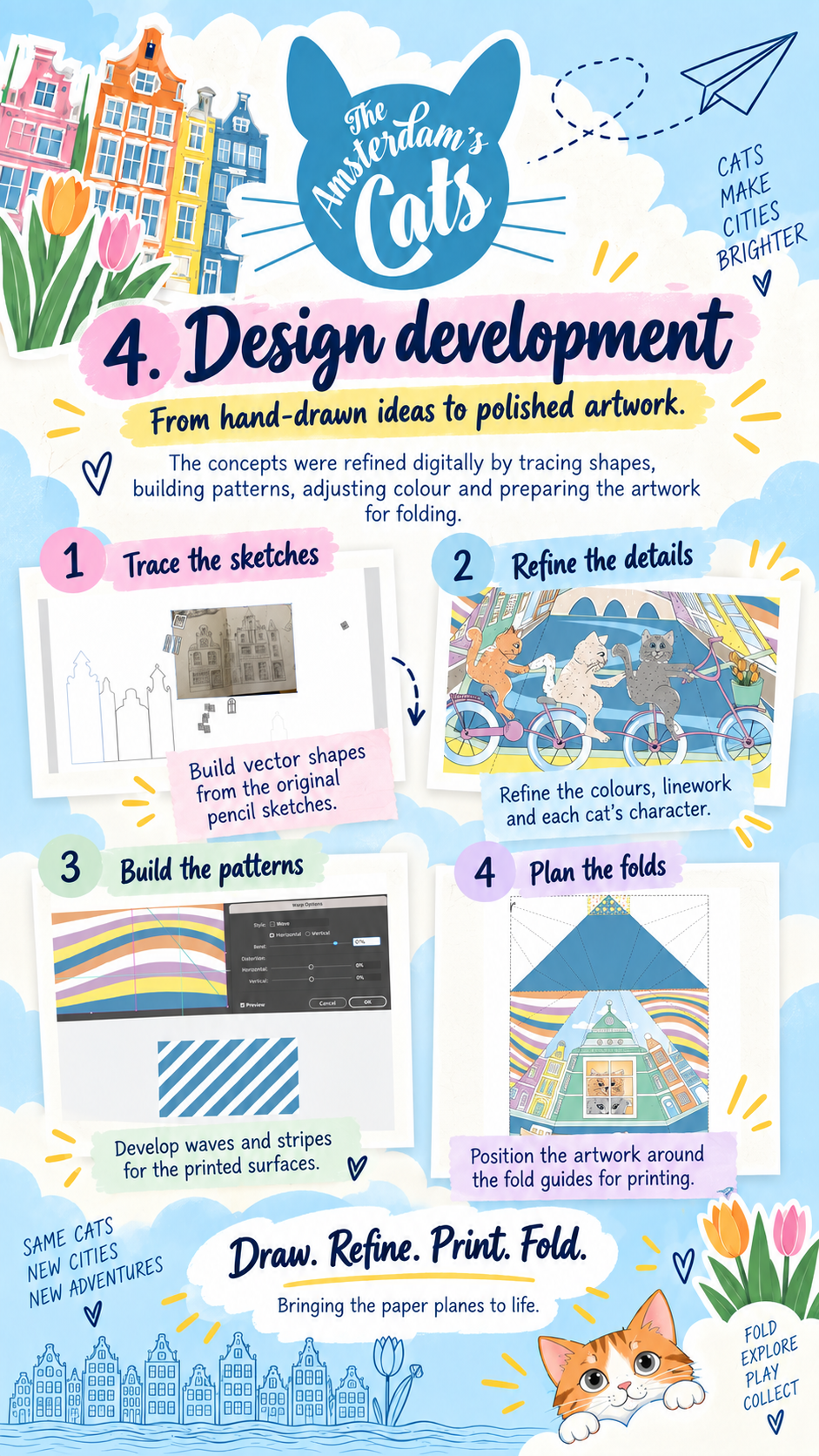
With the prototypes as a guide, we refined the concepts digitally. Shapes were traced from the original sketches, then developed into vector artwork. We adjusted the linework, colours and each cat’s character while keeping the scenes connected as a collection.
Waves and stripes added a repeatable visual rhythm to the printed surfaces. These patterns provided a contrast to the detailed cats, buildings and flowers, and gave the different sides of the folded pieces a shared look.
We also planned the artwork around the fold guides. The placement of a window, a bicycle or a character needed to make sense across the printed sheet and in the folded object. Illustration and layout developed together, rather than leaving the folding considerations until the end.
 View full size
Three stories, ready to unfold.
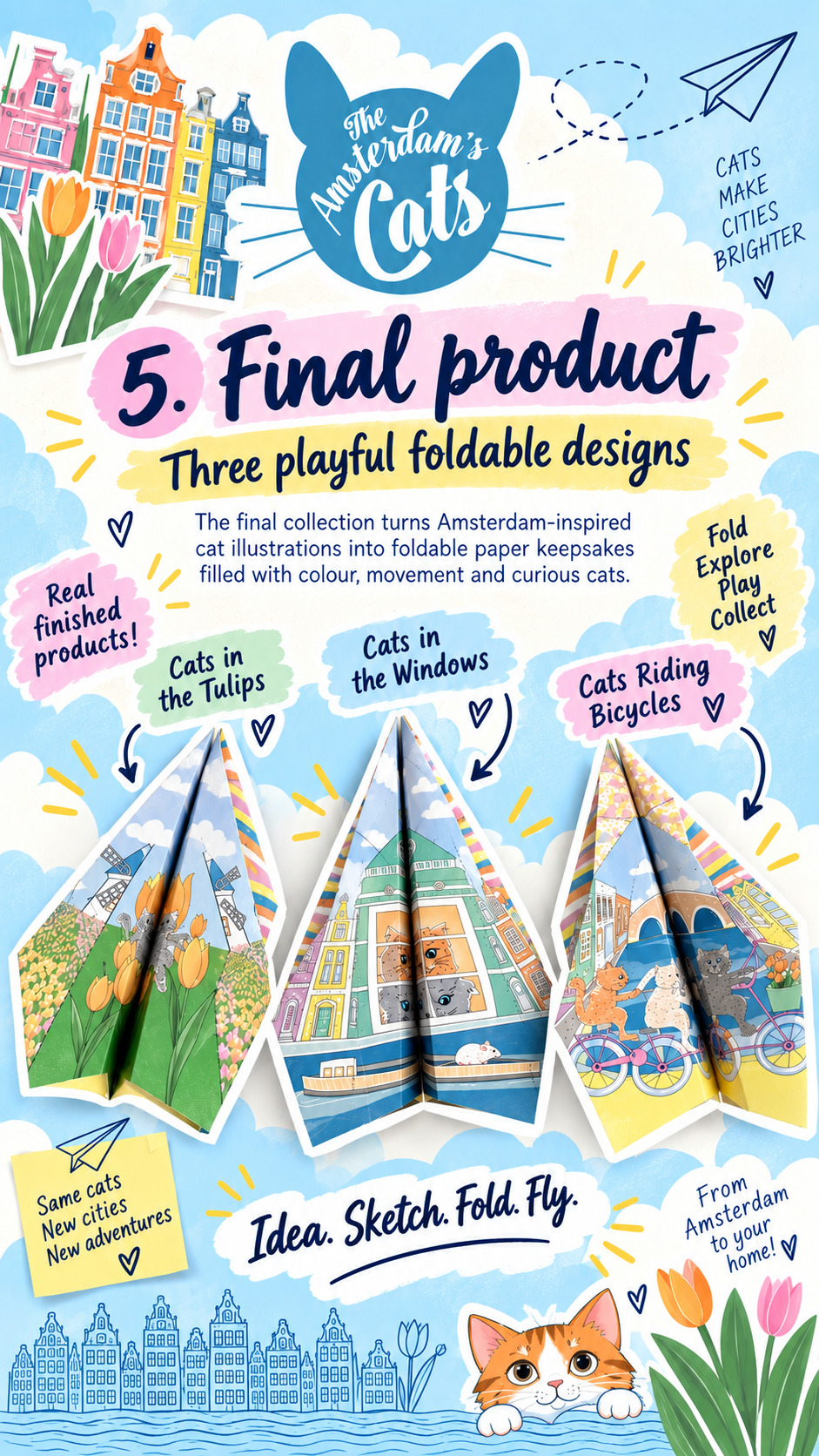
The finished collection brings the three directions to life as colourful paper keepsakes. Cats in the Tulips places the characters among flowers and windmills. Cats in the Windows turns canal-house windows into places to discover small feline faces. Cats Riding Bicycles gives the city’s cycling scenes a playful cast of characters.
The designs share a recognisable palette and illustration style, but each offers a different scene to explore. The paper format adds movement and discovery: folding and opening become part of the experience of looking at the artwork.
Seen together, the final pieces show why the earlier stages mattered. The concept provided a story, the sketches gave it personality, the prototypes tested the physical experience and digital development brought the details into a finished collection.
 View full size
Curiosity.
Craft.
A little surprise.
For us, custom illustration is more than a final image. It is a process of finding the story, exploring its visual language and testing how people will experience it.
Amsterdam Cats Flying Circus gave us room to combine character design, patterns and paper prototyping. Moving between pencil, physical folds and digital artwork kept the creative idea connected to the finished object.
Have a character, product or story you would like to bring to life? Explore our custom illustration service or tell us about your project.